WorkPilot
Run every job from first call to paid.
Small trade businesses run on a whiteboard, a group chat and a spreadsheet, because the big field service platforms are priced and contracted for fifty trucks. WorkPilot puts scheduling, estimates, invoices, payments, forms and job profit in one app a crew of five can be using the same day.
- ROLE
- Solo · Product design · Brand · Frontend · Database · Integrations · Launch film
- PRODUCT TYPE
- Field service management SaaS for HVAC, plumbing and electrical crews
- STACK
- Next.js 15 · React 19 · TypeScript · Supabase Postgres · Tailwind CSS v4
- INTEGRATIONS
- Stripe Checkout · Twilio SMS · Resend email · QuickBooks Online · Claude for form drafting
- STATUS
- Working product on demo data. Integrations built, not yet run against live accounts.
AT A GLANCE
63
Isolation and permission checks
Run against a real database as owners, technicians and a second company
41
Row-level security policies
Across 22 tables. The company is the access boundary
12
Product modules
From dispatch to job profit, built to work together
15s
Launch film
Rendered frame by frame from code, 1080p at 60fps
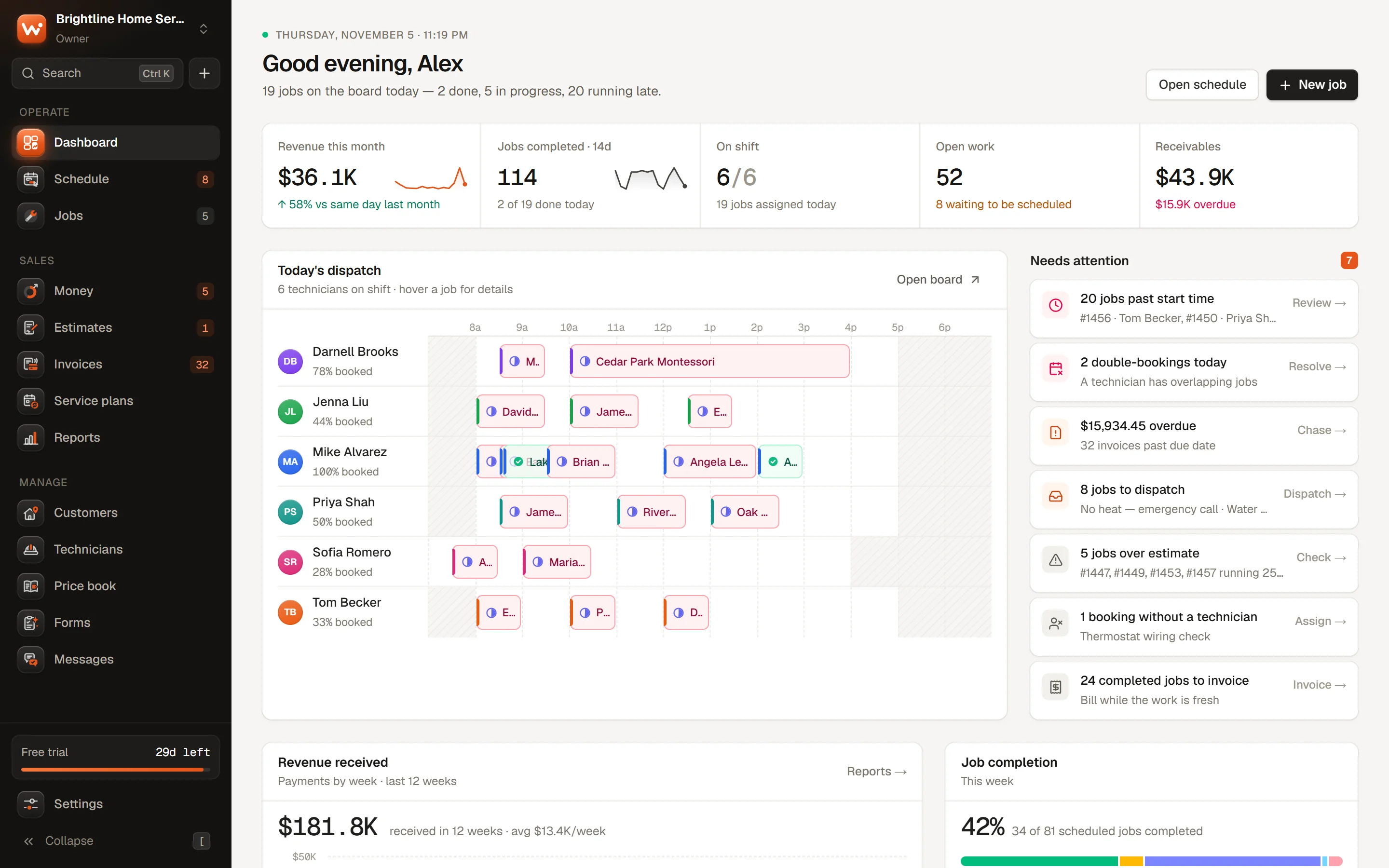
The dashboard: today’s crew on one board, money owed, and the jobs that need someone’s attention
The software is built for fifty trucks. Most crews have five.
Before building, I collected what owners actually complain about in the established tools. The same three themes came up again and again.
Priced per person
Per-user or per-technician pricing means every hire raises the bill, and annual contracts make it hard to leave.
Profit is a guess
Owners know revenue but not what a job made once labour, parts and the receipts in the van are counted.
Weeks to set up
Onboarding projects, add-ons for basics like online payments, and data that is hard to get back out.
One app from the first call to money in the bank.
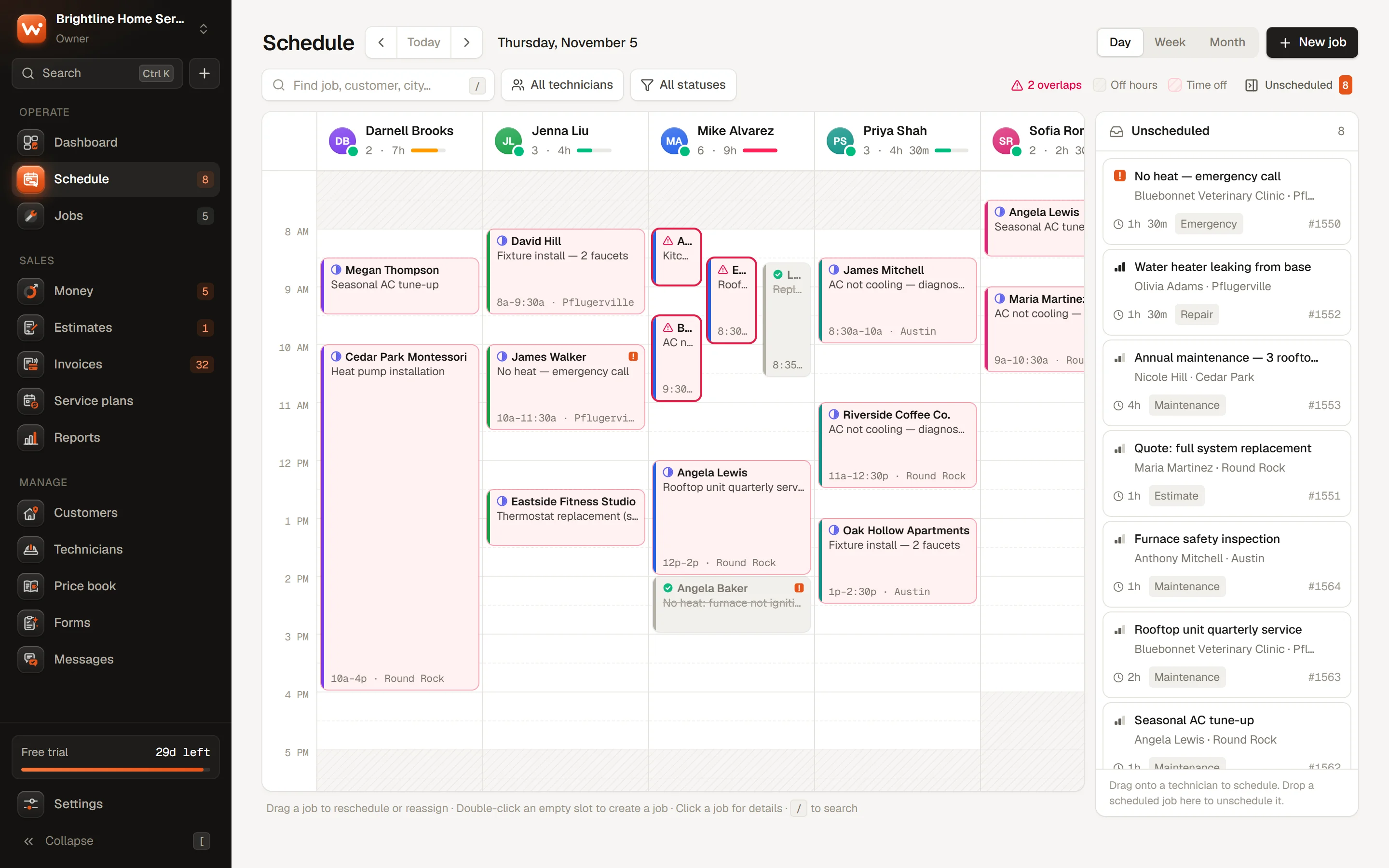
Drag a job. The customer gets a text.
- Day and week board by technician
- Working hours, time off and clashes checked on drop
- Technicians get their route on a phone browser
Quote, signature, job
- Built from the company’s own price book
- Customers review and sign from a link
- One click turns an approved quote into a job
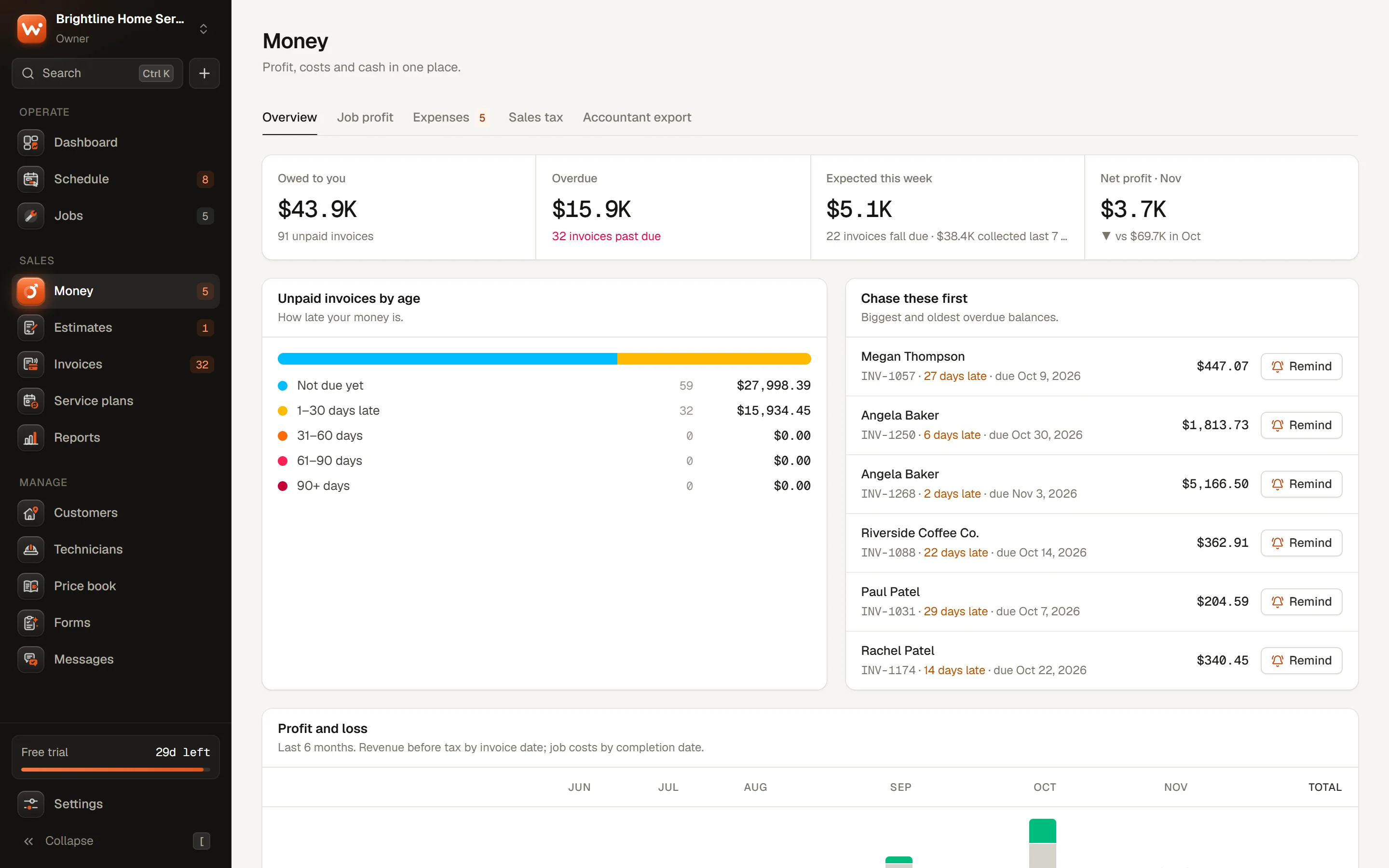
Invoice links customers can pay
- Stripe Checkout on the company’s own account
- Payments recorded on the invoice automatically
- Overdue invoices by age, with one-tap reminders
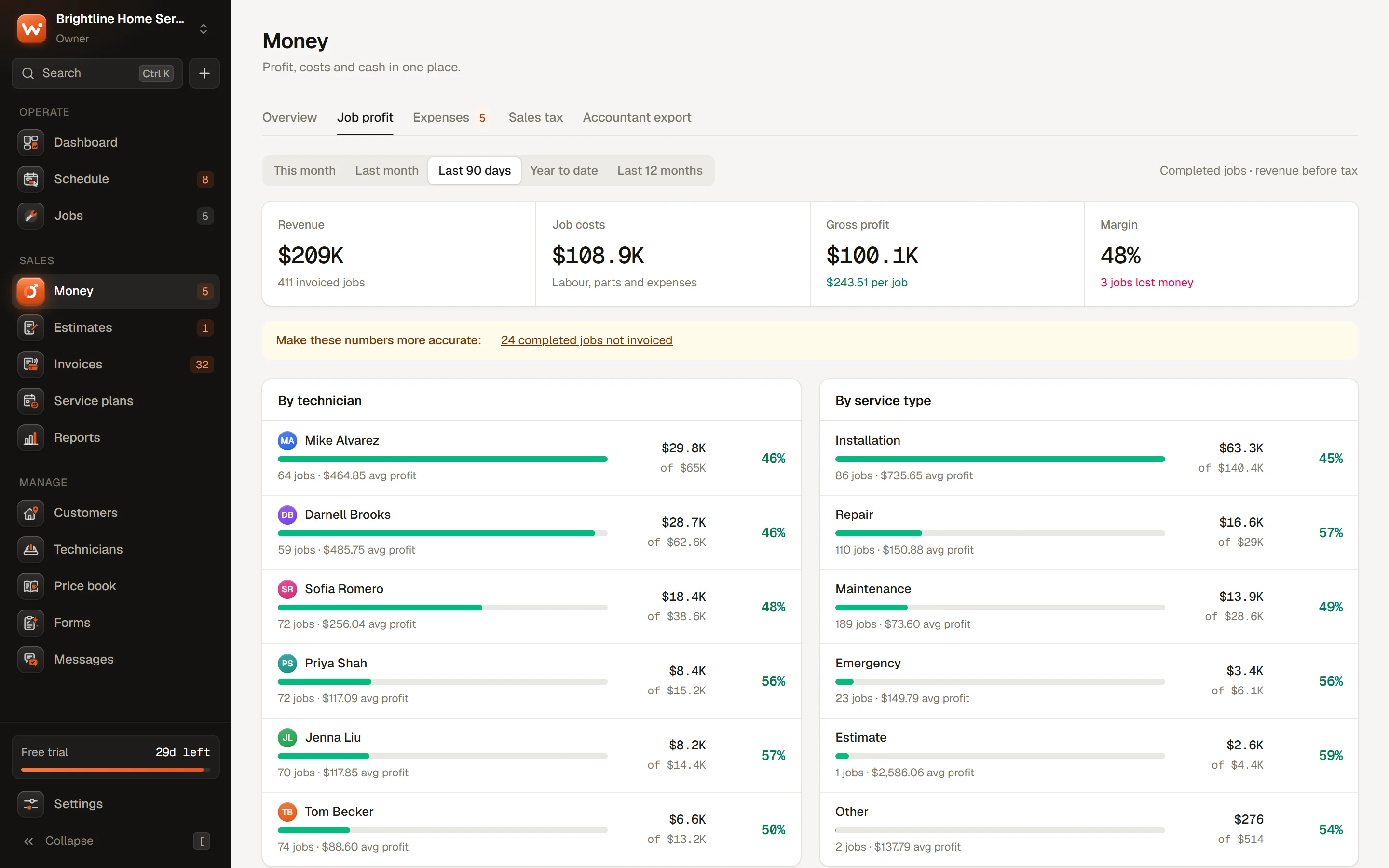
What every job actually made
- Labour from real time on site at each tech’s cost
- Parts at cost, plus approved receipts
- Margin by technician and by service type
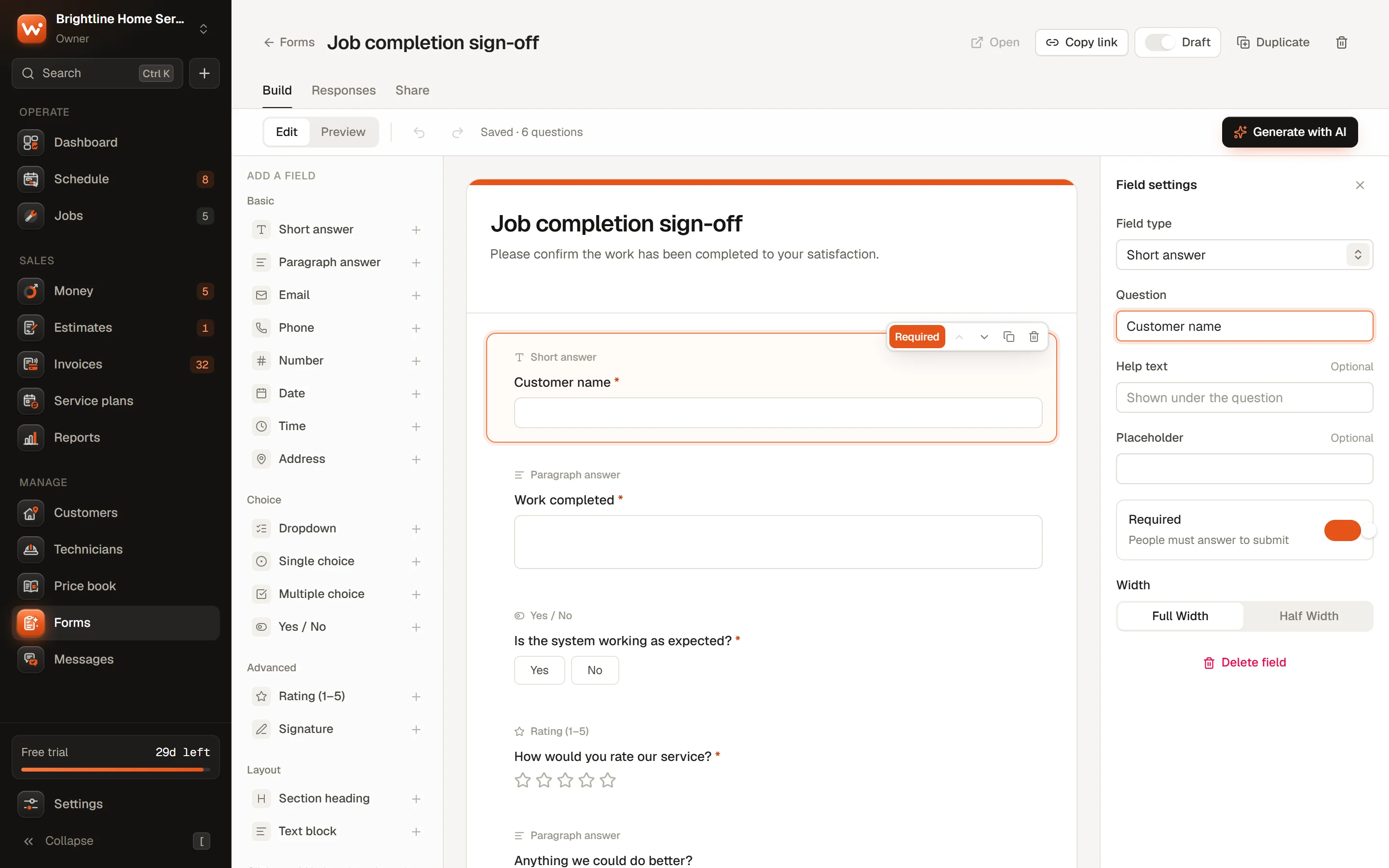
Describe the form, send the link
- Claude drafts the questions from a sentence
- Yes/no checks, readings, ratings and signatures
- Templates for checklists and job sign-offs
Books that close themselves
- Sales tax summary ready to file
- QuickBooks Online sync without duplicates
- Everything exportable as CSV, any time
IN THE PRODUCT
PROBLEM
Customers sign estimates, pay invoices and book visits without an account, but every table is locked to company members.
OPTIONS
Open read policies on those tables, or serve the pages through a privileged server client.
DECISION
Narrow database functions keyed by an unguessable public id, each returning only the fields that page shows and accepting only the one action it allows.
RESULT
Anonymous pages work while the tables stay closed. Tests confirm anonymous visitors read no tables and draft estimates and invoices are never public.
PROBLEM
A Stripe payment can be reported twice: by the webhook and by the customer returning to the success page.
OPTIONS
Trust only the webhook (slow to show as paid) or only the redirect (misses closed tabs).
DECISION
Both paths confirm the session with Stripe, then record the payment under a unique external id built from the session.
RESULT
Whichever arrives first records it. The second is a no-op, so an invoice is never paid twice.
PROBLEM
Technicians submit receipts from the field. Nothing should let them approve their own.
OPTIONS
Hide the approve button for technicians, or check the role in the server action.
DECISION
A database trigger forces any expense a technician writes back to pending, whatever the client sends.
RESULT
Approval stays with the office even if someone calls the API directly. Covered by the permission checks.
PROBLEM
Job profit is only honest if labour is counted, and many jobs have no hourly cost set yet.
OPTIONS
Leave labour out (inflated margins) or block the report until every rate is filled in.
DECISION
Actual hours times the technician’s cost rate, falling back to a company default, with a banner naming the jobs that would make the numbers more accurate.
RESULT
Owners see a believable margin on day one and know exactly what to fix to sharpen it.
Postgres enforces who sees what. The app only renders it.
Every screen reads through the signed-in user’s own database session, so row-level security decides visibility. Anything privileged runs on the server, only after the request has been authorised.
APP
Next.js 15 App Router
Server components and server actions; the technician view is the same app on a phone browser.
DATA
Supabase Postgres
22 tables, 41 RLS policies, 41 functions for multi-step writes like saving an estimate or converting it to a job.
SECRETS
Locked table
API keys for Stripe, Twilio and QuickBooks live in a table with no policies, readable only by the service role.
PAYMENTS
Stripe Checkout
Signed webhooks with HMAC verification and idempotent recording.
MESSAGES
Twilio · Resend
Booking confirmations, on-my-way texts and invoice links, with every attempt logged as sent, failed or skipped.
ACCOUNTING
QuickBooks Online
OAuth2 sync of customers, invoices, payments and expenses, linked so nothing is pushed twice.
FILM
Playwright + ffmpeg
The launch film is one HTML page where every frame is a pure function of time, stepped and encoded at 60fps.
A product that looks like a business, not a template.
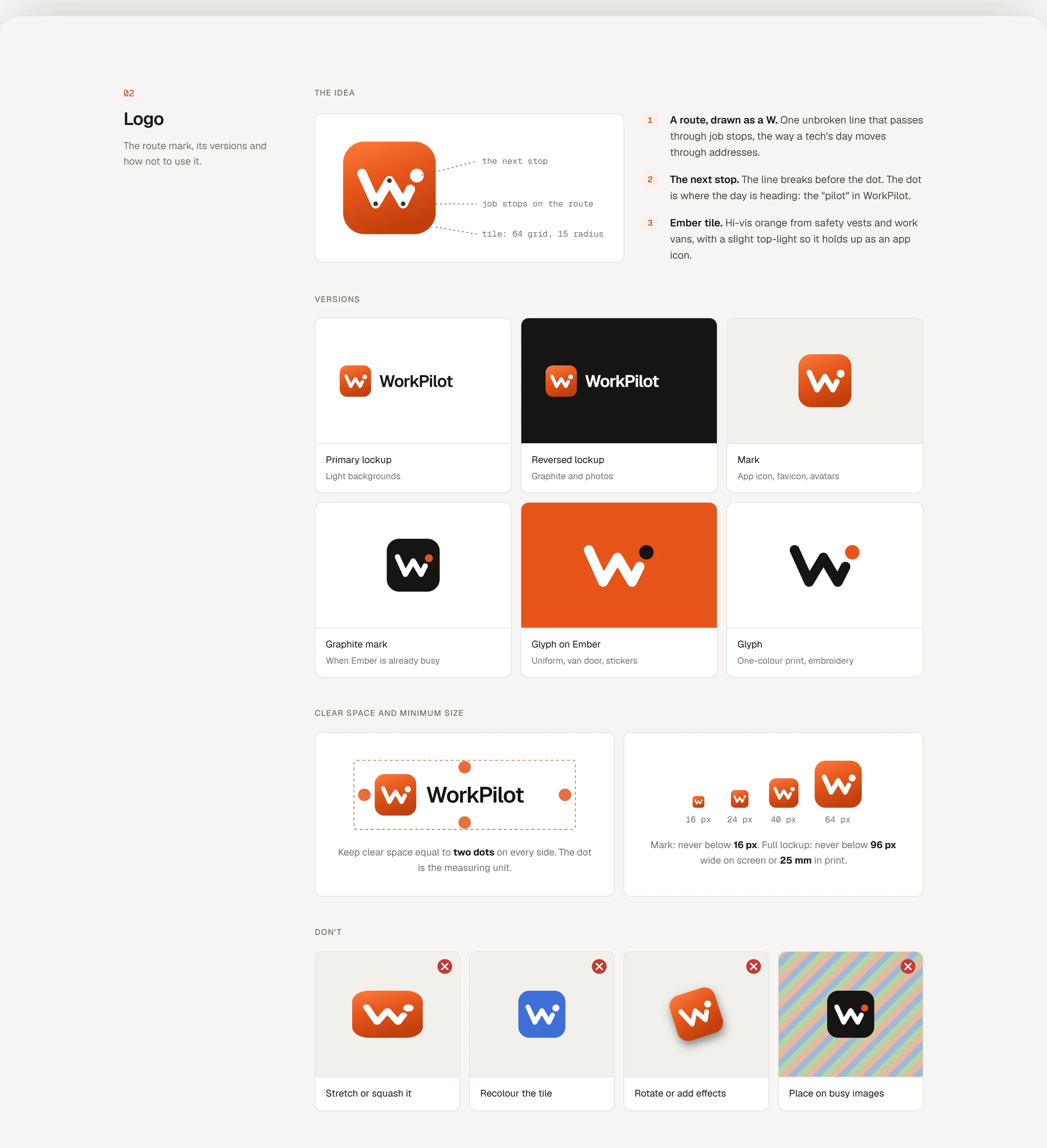
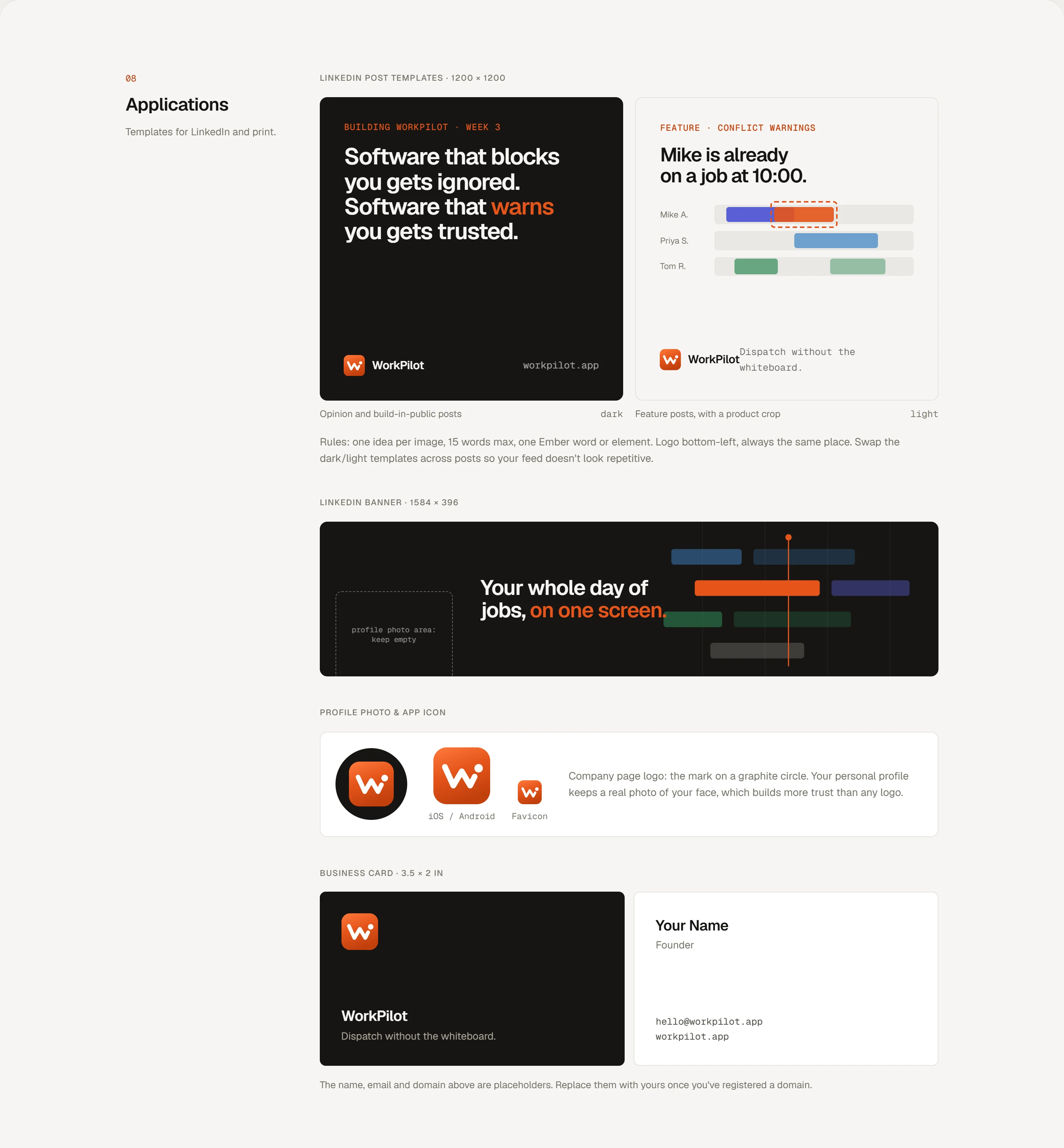
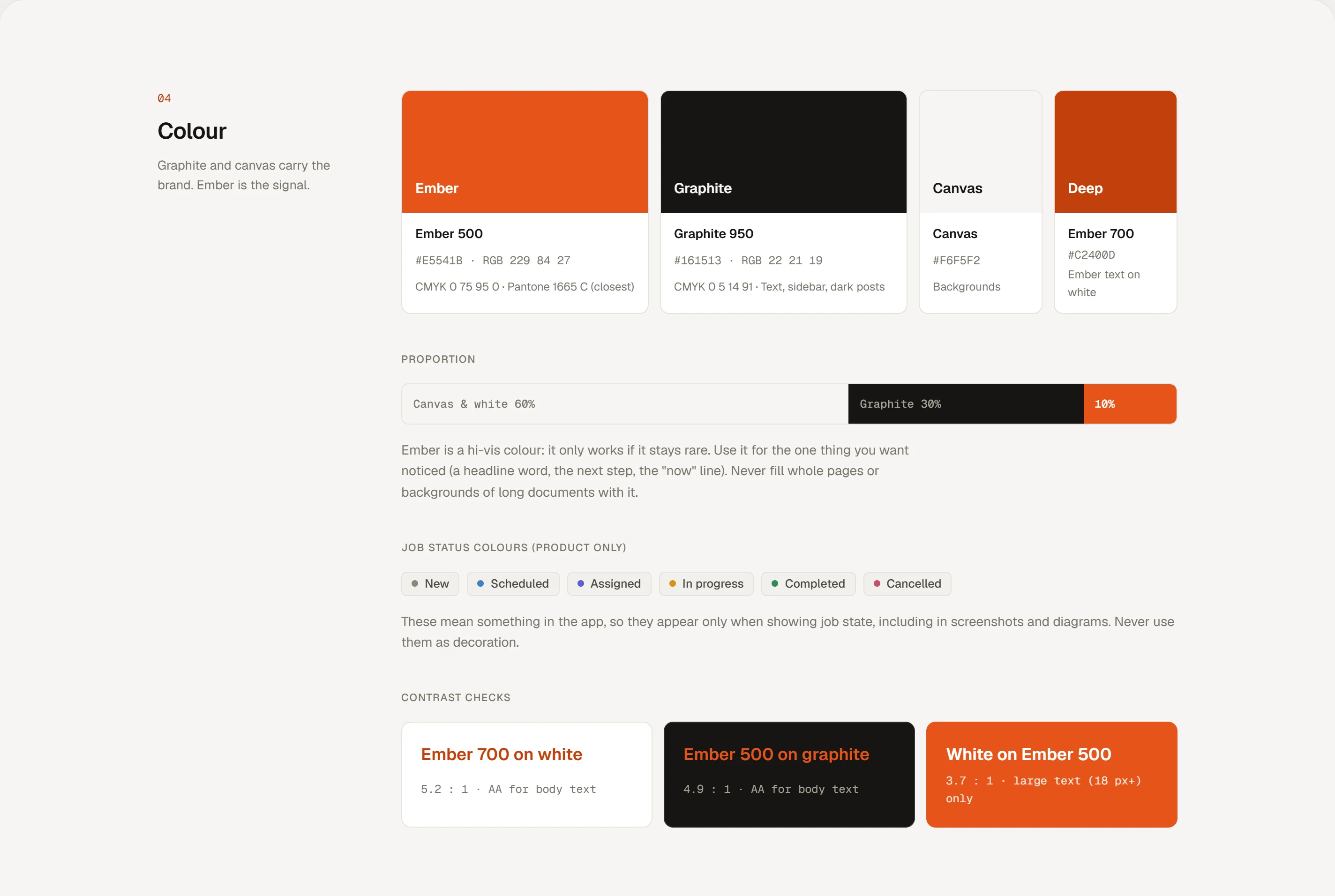
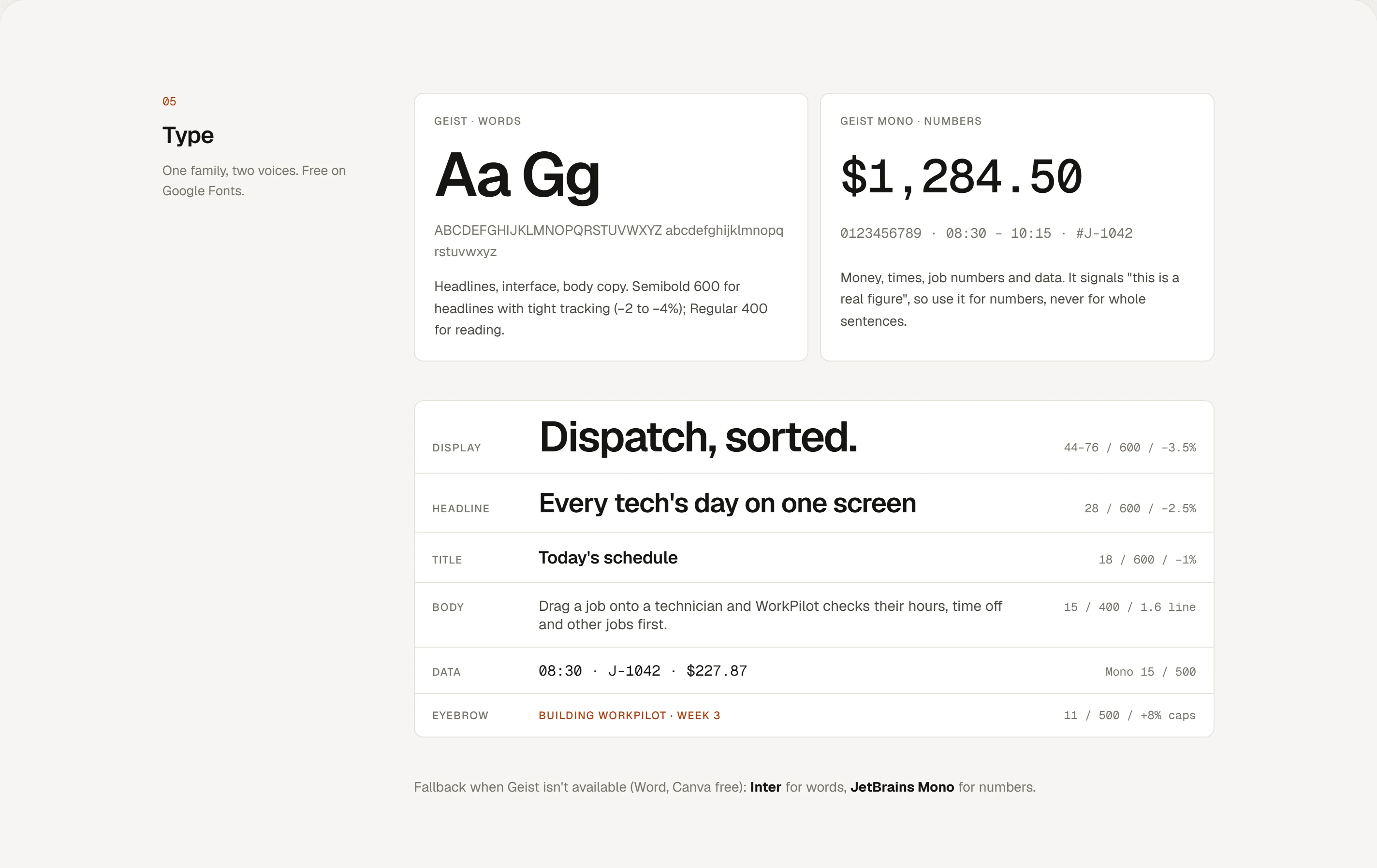
I designed the identity alongside the product and wrote it down as a brand book: a W drawn as a route through job stops, heading to its next stop; graphite and canvas with ember as the one signal colour; Geist for words and Geist Mono for money and times; and templates for LinkedIn, profile photos and business cards.


A 15-second film, rendered from code.
The launch film is a single HTML page where every frame is a pure function of time. A script steps it frame by frame in a headless browser and pipes the frames into ffmpeg, so every render is identical and any change is one edit away. It uses the product’s real icons and the landing page plays it in the hero.
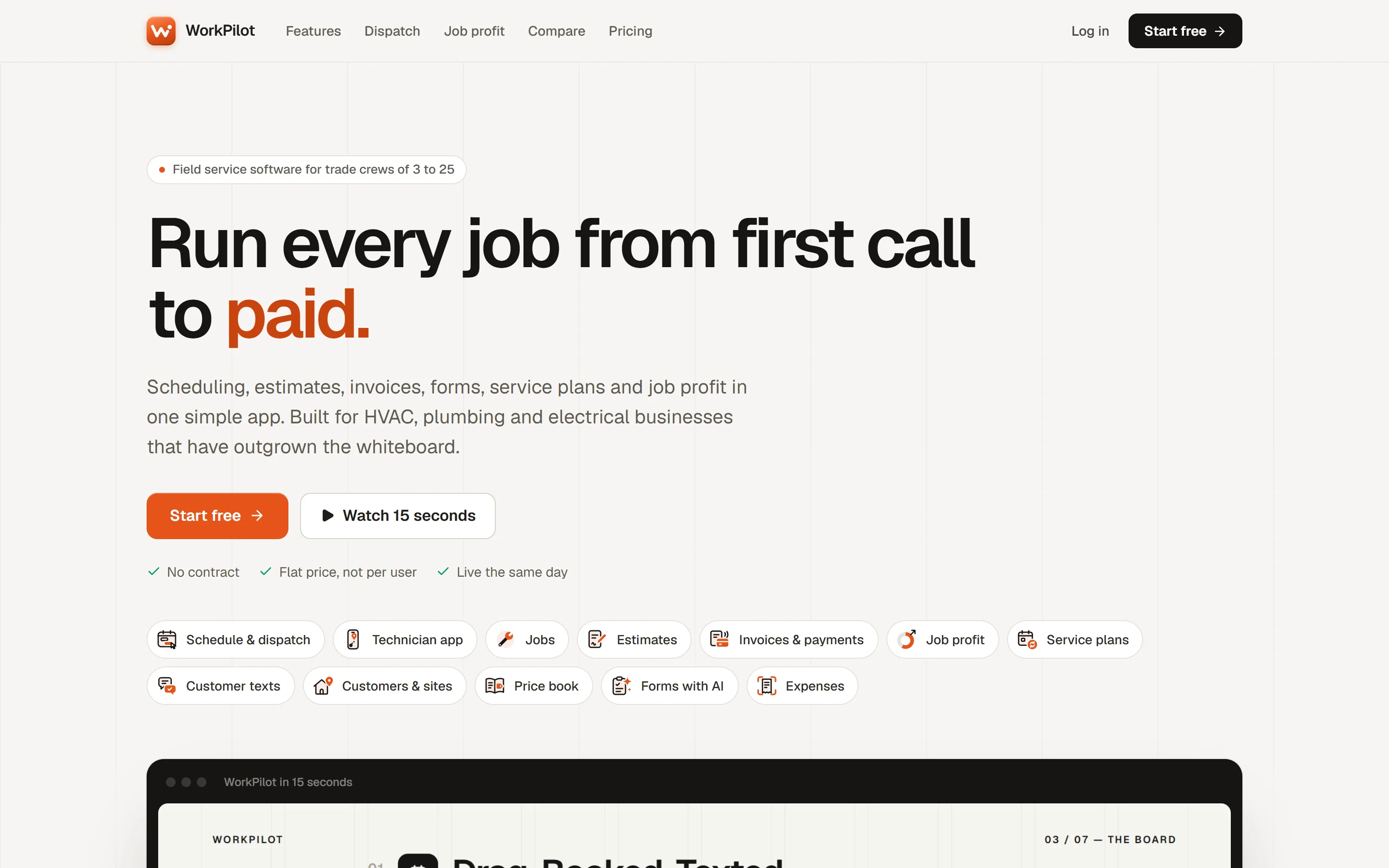
Landing page: the promise, every module at a glance, and the launch film playing in the hero
Where it stands today.
Not launched yet
Everything shown runs on generated demo data for a sample HVAC and plumbing company.
Integrations untested live
Stripe, Twilio, Resend and QuickBooks are built and signature-checked, but not yet run against real accounts.
No native app
Technicians use a phone browser. A store app is a later decision, not a requirement.